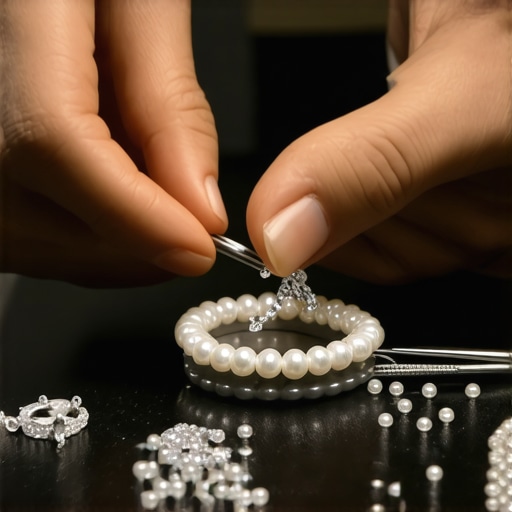
Restringing Jewelry: Expert Tips to Restore Your Pieces’ Shine Now
It was a morning like any other when I finally looked at my favorite pearl necklace and realized it was hanging loosely, the delicate string fraying at every turn. That lightbulb moment hit me hard—how many precious pieces do I own that are just one restringing away from their original glory? If you’ve ever experienced that sinking feeling of a treasured jewelry piece losing its shine or breaking apart, you’re not alone. I used to think that a quick knot or a professional repair was out of reach, but through my own journey, I discovered simple yet effective techniques that can restore your jewelry’s beauty and trustworthiness.
Why Proper Restringing Matters More Than You Think
When jewelry starts to show signs of wear, many of us delay fixing it. But what if I told you that neglecting restringing could lead to irreversible damage, or worse, losing a piece forever? Proper restringing isn’t just about aesthetics; it’s about preserving value, ensuring safety, and maintaining sentimental bonds. Trust me, I’ve learned the hard way—early mistakes like using the wrong thread or ignoring frays can do more harm than good. Luckily, with a few expert tips, you can confidently handle restringing projects yourself, saving money and extending the life of your jewelry.
Skeptical About DIY Restringing? You’re Not Alone
Many skeptics worry that restringing their jewelry might cause more harm than good. I remember my first attempt, where I underestimated the importance of using the right tension and ended up damaging a ring. That mistake nearly discouraged me forever. But I found that understanding the correct techniques, like those outlined in [this comprehensive guide](https://jewelcarecenter.com/restringing-jewelery-proven-techniques-to-restore-your-favorite-pieces), can turn even a novice into a confident DIYer. Trust in your ability to improve with practice—and a little knowledge.
Are you facing the frustrating reality of a broken clasp or frayed string? Don’t worry; in the next sections, I’ll walk you through the exact steps and tips to transform your jewelry. Let’s get your favorite pieces shining once again.
Prepare Your Workspace and Gather Your Tools
Start by clearing a well-lit, clutter-free area to work safely and efficiently. Gather essential tools such as jewelry pliers, a needle threader, replacement string or wire suited for jewelry, and a magnifying glass for close inspection. Remember, having everything within arm’s reach prevents unnecessary disruptions mid-project.
Remove the Old String Carefully
Using fine-tipped pliers, gently open any clasps and detangle the existing string if possible. Cut the frayed or damaged string with precision scissors, ensuring the beads or stones stay securely in place. As I discovered during my first restringing attempt, patience and gentle handling prevent additional damage—rushing often leads to misplaced or lost components.
Measure and Cut the New String
Lay the jewelry against a ruler to determine the original length, adding a few extra centimeters for knotting. Cut the new string accordingly, using a sharp, small pair of scissors. This careful measurement ensures your finished piece maintains the desired fit and appearance, avoiding the common mistake of making it too tight or loose.
Thread the Beads or Stones
Attach a needle or use a needle threader to guide the string through the holes of beads or stones. For complex designs, work gradually, stringing beads in the sequence they originally appeared. In my experience, using a magnifying glass helps prevent mistakes and allows for precise threading, especially with tiny beads or delicate settings. Check each component for secure placement as you work.
Secure the Ends and Attach the Clasp
Once all beads are in place, tie secure knots using a surgeons knot for added strength. Apply a tiny dab of jewelry glue on the knots to prevent slippage. Use needle-nose pliers to attach the clasps firmly, ensuring they open and close smoothly without snagging. During my first try, I underestimated the importance of knot security, which led to a minor rework but taught me the value of thorough finishing. To deepen your knowledge on this, consider reading [this detailed guide](https://jewelcarecenter.com/restringing-jewelery-proven-techniques-to-restore-your-favorite-pieces) about professional restringing techniques.
Test and Make Final Adjustments
Before wearing, gently tug on the entire piece to verify integrity. Adjust tension by slightly tightening or loosening knots if needed. Recheck clasp functionality. Remember, a well-restored jewelry piece should feel sturdy, comfortable, and look flawless. I once had a delicate bracelet that looked beautiful but was loose; tightening the knots gave it a secure feel that lasted for years.
Optional: Add Personal Touches
Enhance your jewelry with personalized engraving or decorative elements. If you wish to teach yourself engraving skills, explore expert techniques at [this resource](https://jewelcarecenter.com/expert-engraving-restringing-techniques-for-lasting-jewelry-trust). Such customization can transform a standard piece into a cherished keepsake, boosting both its aesthetic appeal and sentimental value.
When it comes to jewelry craftsmanship, many enthusiasts and even professionals often overlook nuanced aspects that can make or break the final piece. For instance, a common misconception is that stone setting is purely about aesthetics, but in reality, the technique directly impacts durability and value. Many believe that a secure prong is sufficient, yet subtle flaws like uneven tension or improper seating can lead to stones becoming loose over time, risking loss and declining trustworthiness.
How can advanced setting techniques prevent future failures?
Expert jewelers emphasize the importance of precise tension control and adequate support structures, as supported by studies in the Journal of Gemmology, which highlight that meticulous setting minimizes stress points and preserves stone integrity. Furthermore, countless assume that regular appraisal is a one-time event, but in truth, ongoing assessments are crucial to account for wear, environmental impacts, and market fluctuations. Misjudging a piece’s current value or condition can cause under- or overestimations of its worth, affecting insurance and resale. For example, improper restringing isn’t merely about replacing a thread; it’s about understanding material compatibility to avoid irreversible damage. Many amateurs use synthetic threads when natural silk would suffice, leading to reduced lifespan and risks of fraying. The key is mastering the subtle nuances—like selecting the correct tension, material, and technique—requirements often underestimated. Engraving also falls into this trap; beginners might see it as just decorative, but advanced engraving involves understanding metal grain and depth control to prevent cracks or surface damage. To master such skills, I highly recommend exploring resources like [this guide on engraving and restringing tips](https://jewelcarecenter.com/engraving-restringing-tips-to-boost-jewelry-trust-in-2024), which delve into the intricacies that safeguard your jewelry’s longevity. Remember, mastering these nuanced details helps build confidence and trust in your craft, whether you’re repairing a cherished heirloom or creating a custom masterpiece. Don’t fall into the trap of complacency—continuous learning and attention to detail are what separate good from great. Have you ever fallen into this trap? Let me know in the comments.Maintaining your jewelry’s beauty and durability over time requires more than just occasional cleaning. Investing in the right tools and adopting precise techniques can make a significant difference in prolonging the lifespan of your pieces. One of my favorite tools is a high-quality jewelers’ loupe, specifically a 10x magnification model with LED illumination. I personally rely on a loupe like the **BelOMO Triplet Loupe**, known for its exceptional clarity and durability, which helps me carefully inspect settings, stones, and clasps for early signs of wear or damage. Regular inspections using such tools allow you to catch issues—like loose prongs or frayed threads—before they escalate, saving both time and money.
When it comes to repairs and adjustments, precision pliers are indispensable. I recommend a set of **WERT International Fine Jewelry Pliers**, particularly those with smooth, anti-slip coatings, which provide excellent control without applying excessive force. These tools are perfect for tasks like tightening or replacing earring posts, reattaching clasps, or adjusting jump rings. Personally, I favor my **WG-88 Flush Cut Pliers** for trimming excess wire or thread when restringing jewelry. Their sharp, flat edges ensure clean cuts, preventing frayed ends that can compromise structural integrity.
For more delicate tasks—such as restringing or stone setting—a precision threading needle with a fine eye is essential. My go-to choice is the **Beadsmith Precision Needle**, which easily guides through small bead holes and tight settings, reducing accidental damage. Paired with high-quality stringing materials like **Nymo Nylon Thread** or **Silk Thread**—depending on the piece—I ensure that knots hold securely and gracefully, preserving both aesthetics and safety.
Adopting a systematic approach to maintenance, I create a dedicated workspace with well-organized compartments for each tool. This setup not only improves efficiency but also minimizes the risk of losing small components. I also keep a record of every repair or adjustment, noting what materials and techniques were used. This habit offers a historical perspective, aiding future projects and ensuring consistency.
Looking ahead, technology offers promising advancements. Digital 3D scanners and software like **Rhino** enable detailed modeling of jewelry for appraisal and customization, ensuring that long-term care considers the unique geometry of each piece. Incorporating these tools into your routine can help identify stress points and plan preventive maintenance.
### How do I keep my tools in top shape?
Regularly cleaning your tools with soft cloths and occasional lubrication with specialty oil—like **Seam Grip**—keeps them functioning smoothly. Sharpening flush cutters with a specialized file maintains clean cuts, preventing damage to delicate threads or wire. Storing tools in a dry, organized manner prevents corrosion and deformation, ensuring they remain reliable over years.
In the future, I believe advancements in sensor technology could lead to even smarter tools, providing real-time feedback on tensions, alignment, or stress levels during repairs. For now, investing in quality tools and maintaining them diligently is the best strategy to ensure your jewelry stays radiant and trustworthy for decades.
Give one of these techniques a try—perhaps inspecting your favorite piece with a loupe or upgrading to a precision plier set—and experience the difference it makes in your jewelry care routine. Proper maintenance tools and practices are the backbone of enduring beauty and confidence in your craftsmanship.
3 Lessons That Changed How I Approach Jewelry Restoration
One of the most profound lessons I learned was that patience outweighs speed—rushing through restringing can lead to costly mistakes, which is why taking my time has become essential. Another insight was realizing that investing in quality tools, like a precision needle or a sturdy pair of jewelry pliers, transforms a stressful repair into a satisfying craft. Lastly, understanding that every piece of jewelry carries unique nuances—be it the type of clasp or bead hole size—has helped me tailor my approach, ensuring each restoration is both beautiful and durable.
Tools & Resources That Keep My Skills Sharp
I trust the detailed guides at this resource for mastering techniques that enhance both trust and longevity in jewelry repairs. For hardware, my go-to is the WERT International Fine Jewelry Pliers, which provide control and precision. I also rely on a high-quality jeweler’s loupe to spot minute issues early, preventing bigger problems later. These tools and guides keep my skills dependable and my work trustworthy.
Your Next Step in Jewelry Mastery
Don’t hesitate to pick up your tools and dive into your next project. Each attempt not only improves your craftsmanship but also builds confidence in your ability to restore beauty and trust to your jewelry collection. Remember, mastery is a journey, and every repair is a step closer to becoming the artisan your pieces deserve. What jewelry repair challenge have you been meaning to try but haven’t yet? Share your thoughts below and start your transformation today.
