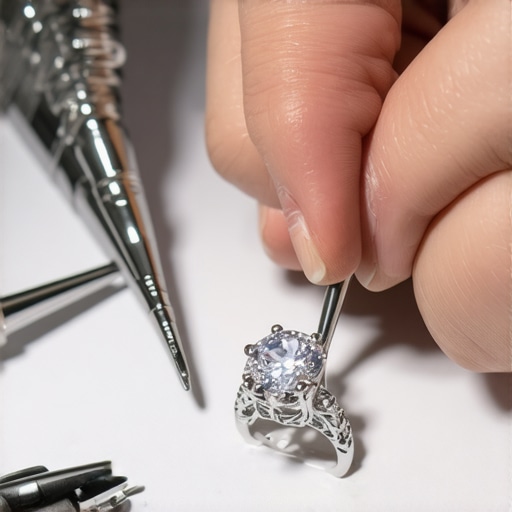
Stone Setting Techniques: Expert Tips to Elevate Jewelry Value Today
I’ll never forget the sinking feeling I experienced the first time a delicate gemstone within one of my custom pieces slipped loose during a client appointment. It was a wake-up call—it wasn’t just about aesthetics anymore; it was about trust, craftsmanship, and the true value of the jewelry I created. That moment sparked my journey into perfecting stone setting techniques that not only secure gemstones flawlessly but also enhance the overall appeal and worth of jewelry. Are you tired of revisiting repairs or feeling uncertain about your settings’ durability? If so, you’re not alone.
Why Paying Attention to Setting Techniques Can Transform Your Jewelry
In the world of jewelry making and repair, the setting of a gemstone is like the foundation of a house. A well-executed setting ensures longevity, safety, and undeniable beauty. Yet, for many artisans and hobbyists, it’s often the last step, underestimated in its importance. A poor setting not only risks losing precious stones but also diminishes the perceived and actual value of your pieces. The great news? With a few expert tips, you can elevate your skills significantly. To truly understand what makes a setting stand out, consider how a secure, well-crafted setting influences customer trust and can even command higher prices.
Early in my career, I made a classic mistake: rushing through the setting process, assuming that if it looked good, it was good enough. However, I learned that the devil is in the details. Small imperfections, like uneven prongs or insufficient tension, can lead to ongoing problems. That’s why I recommend exploring *Stone Setting Techniques: The Ultimate Guide to Stunning Jewelry* to build a solid foundation of knowledge. This resource offers proven strategies that can dramatically improve your craftsmanship and ultimately, your jewelry’s value.
Is Overconfidence in Your Setting Skills Costing You Sales?
Here’s a tough truth many overlook: Even with years of experience, minor oversights can undermine your work’s integrity. I once underestimated the importance of proper seat preparation and tension control. That mistake cost me both time and reputation. Recognizing that there’s always room for improvement is vital. Incorporating best practices and continuous learning, such as mastering *Expert Tips for Stone Setting*, helps ensure each piece you craft is a masterpiece of durability and elegance. The good news? These skills are learnable and can be a real game-changer in boosting both confidence and sales.
Now that we’ve acknowledged why setting techniques are so pivotal, it’s time to dive into the practical steps that will take your jewelry craftsmanship to the next level. Whether you’re fixing a piece or creating one from scratch, understanding these key principles will firmly anchor your work in quality and trustworthiness.
Secure Every Gem with Precision
Start by preparing your workspace and tools. Use a loupe to inspect the gemstone’s girdle—this is your reference point for fitting the setting. When setting a stone, imagine it as placing a puzzle piece into its slot; every edge must sit snugly without forcing. For instance, I once rushed a prong setting and didn’t check the tension adequately, which led to a loose stone. To avoid this, gently press the prongs around the gem, ensuring even contact. Use spring-loaded prong pushers to seat the prongs uniformly, then gently bend them over the stone with a burnisher, mimicking how a gardener gently ticks down stakes—firm, yet careful. For detailed techniques, consult this guide.
Restoring Shine through Restringing
Restringing is akin to giving old, frayed rope a new life. Start by removing the old cord carefully and measuring the original length, adding a little extra for knotting and tension. Use a jeweler’s knot to secure the beads tightly, sealing the ends with a crimp bead. I once worked on a pearl necklace whose silk thread was so worn that the knots appeared loose; replacing it improved the necklace’s durability and appearance drastically. To ensure the new string doesn’t slip, crimp securely with pliers, but avoid over-tightening, which can crack the pearls. For expert tips, see resringing strategies.
Engraving Personal Touches Effortlessly
Think of engraving as carving your signature or message into a piece of jewelry—like inscribing a message in a stone. Start with a clean, dry surface and use a fine engraver bit. Steady your hand, and hold the tool at a consistent angle—about 45 degrees—allowing precise control. Practice on scrap metal to develop your steady hand, just as a calligrapher warms up. Light, consistent strokes produce cleaner results than heavy pressure. When adding initials or patterns, plan the design beforehand with light pencil marks. I once engraved a heartfelt message on a mourning ring, using this method, which created a lasting memory for the customer. Keep yourself updated on advanced techniques through engraving tips.
Many skilled artisans and hobbyists alike believe they have a handle on stone setting, restringing, engraving, and appraisal processes, but often, misconceptions and overlooked details undermine their efforts. Let’s dig deeper into what most get wrong and uncover the hidden nuances that can elevate your craftsmanship from good to exceptional.
Why the myth of perfect tension can trip you up
There’s a widespread belief that once a gemstone sits securely, it’s perfectly set. However, the reality is far more nuanced. Excessive tension in prongs can cause stress fractures in delicate stones, leading to long-term damage. Conversely, insufficient tension risks stones becoming loose over time. Achieving the right balance requires understanding the material’s response and the specific gemstone’s properties. An advanced mistake many make is relying solely on visual cues without testing tension systematically—something that can be easily overlooked but significantly impacts durability. For in-depth techniques, consider reviewing this comprehensive guide to refine your tension control skills. Additionally, a misbelief is that ‘more tension equals better security,’ but in truth, tailored tension considering each stone’s hardness and setting style is key.
Can you truly trust your tools to guide perfect tension?
Many believe that modern tools guarantee precision in setting and tension. While quality tools are essential, over-relying on them can be dangerous. For example, spring-loaded prong pushers and tension meters are helpful, but they need to be understood and calibrated properly. A common trap is assuming a tool reading is infallible, when in fact, improper calibration or technique can induce errors. Regularly verifying tool accuracy and understanding their limitations is crucial. According to experts in the field, mastering the art of tactile feedback—feeling the resistance and tension manually—is often the most reliable measure for advanced artisans.
The false confidence that restringing is straightforward
Restringing might seem simple at first glance—just replace the thread. But advanced practitioners know that the real nuance lies in selecting the right material, knotting, and tensioning to match the jewelry’s purpose and wearability. An overlooked mistake is using unsuitable string or cord, which can cause fraying or loss of luster over time. Also, applying too much or too little tension during restringing can ‘set’ the necklace in an undesirable way, affecting both aesthetics and durability. Remember, the goal is to restore the piece’s original feel and function, not just its appearance. Learn from this expert resource to master subtle tension adjustments that make a real difference.
Mastering engraving without leaving scars
Engraving may appear straightforward—hold the tool steady and carve away. But advanced craftsmen understand that pressure control, tool angle, and material awareness are key to avoiding scratches or uneven lines. A common myth is that ‘more pressure results in faster work,’ but in reality, excessive force causes jagged lines and damage to the metal. The secret lies in applying light, consistent pressure, and practicing on scrap materials before working on your beloved pieces. Also, planning the design meticulously and using guides or stencils can dramatically improve precision. As highlighted in this article, mastering fine motor control and understanding engraver bit behavior are essential for sophisticated, scar-free engraving.
Having a comprehensive understanding of these nuanced areas ensures your work isn’t just good enough but outstanding. Forget the myths, pay attention to details, and always continue learning. Do you recognize any of these traps in your practice? Let me know in the comments and share your experiences!
Ensuring your jewelry remains in pristine condition over time requires more than just skill—it demands the right tools and diligent maintenance. From setting delicate stones to restoring luster through restringing and engraving, having the proper equipment can make a significant difference. I personally swear by high-precision microscopes like the III-4z Stereo Microscope for detailed work such as stone setting and engraving. This tool provides excellent clarity and variable magnification, allowing me to detect even the tiniest imperfections and ensure every setting is flawless. Regular maintenance of your tools, such as cleaning burnishers and calibrating tensioning devices, is equally vital to maintain their effectiveness and precision. For example, I always keep my peg and block setups clean and well-oiled, which enhances control and reduces the risk of damaging delicate pieces.
In the realm of software, I rely on design programs like Rhino 3D for prototyping and visualizing complex settings before execution. This prevents costly mistakes and helps plan supporting structures with greater confidence. As technology advances, integrating digital tools with traditional craftsmanship will only become more essential, enabling artisans to scale their work while maintaining high quality.
Long-term results depend heavily on routine inspections and minor touch-ups. For instance, re-tightening prongs every few years can prevent loose stones, especially in frequently worn pieces. I advise setting a periodic maintenance schedule—at least once annually—to check tension, condition the metal, and replace worn parts. This habit not only preserves the integrity of your jewelry but also reinforces customer trust when you present your meticulous care routines.
Looking ahead, I predict that innovations such as AI-driven inspection tools will further enhance our ability to detect micro-damage and forecast potential failures before they happen. Embracing these advancements now will set you apart as a forward-thinking craftsman capable of delivering durable, high-value jewelry that stands the test of time.
How do I maintain my tools and equipment over time?
Regular cleaning, calibration, and thoughtful storage are key to longevity. Use gentle solvents like isopropyl alcohol to clean burnishers and pliers, and keep calibration devices like tension meters in specialized cases to prevent false readings. Periodic calibration ensures your tensioning tools provide accurate feedback, which is crucial for secure stone settings. Additionally, investing in high-quality storage solutions—like padded trays or dust-free cabinets—prevents accidental damage and prolongs tool life. Practicing these habits today will lead to smoother workflow and better results in the future. If you’re interested in elevating your restoration capabilities, consider trying my recommended method of tension control, which involves a combination of tactile feedback and calibrated tools—see how this approach could transform your finishing process by visiting this comprehensive resource.
Lessons I Wish Someone Told Me About Stone Setting and More
One of the toughest lessons I learned was that perfect tension isn’t just about appearance—it’s about the stone’s long-term safety. I once believed that a snug fit meant success, but over-tightening led to cracks in fragile gems. Now, I know that balance and tactile skill are everything. Another realization was that tools don’t replace intuition; feeling resistance and wearing a microscope taught me more than any manual. Lastly, I underestimated how overlooked details—like prong preparation or inconsistent knotting—could negate years of effort. These lightbulb moments shaped my approach, reminding me that mastery is a continuous journey—embrace humility and always seek deeper understanding.
